
Craft shopping in South Korea - May 2026
TL;DR: Craft shopping in South Korea is amazing.
Travel Planning
After the knot exhibition in 2019 in Japan we popped over to Seoul for a few days (4 days, but 2 of them travel days, so really 2). In any case, in my estimation, the trip was too short and I've been pulling for a re-/proper visit. To bolster my case, I promised that we would spend no more than 2 days at Dongdaemun out of a 2 week trip.
Travel articles, travel blogs, and YouTube videos gave us an itinerary of Seoul, Busan, and Jeju. One of the articles mentioned so many things that I suggested we expand the trip by a week so that it would not feel so cramped and rushed.
The trip would let me visit with knot-friend Baeky (배키) who loves knot books, perhaps as much as I do. This gave me the opportunity to gift her some of my duplicate book collection. While some of the duplicates are the result of faulty memory or shopping accidents, some of them are from when I had delusions of being a shopkeeper. Gifting some of my failed shop stock to a new home where they'd be appreciated is the best outcome.
Of course, I am not all about virtuous decluttering, I also asked Baeky about my quest for a dahoeteul, although I was trying to start small(er?) with cardboard braiding stand and/or paper cup braiding stand. I figured that these sellers might not have a physical store and I might need to order to a Korean address with enough time for snail mail fulfillment and fuss. With Baeky's help, I was able to find the paper cup creator (who unfortunately didn't have any in stock but is planning to make more(??)). But she did have some ceramic vase dahoeteul (her Instagram) and a physical store. After some negotiation about braiding stands, tassel making stands, and such; I had a second knotty destination for the itinerary. Note that if you order from "Tea Party Room" (다회규방), the braiding weights are made to order and need around a week if you're planning to pick them up.
Now, I also had a second target for book gifting. While my joke/suggestion about bartering books for braiding stand parts fell on deaf ears, I did not care. Since the knot exhibition in 2019, I have been on a mission to get Koreans involved in The Braid Society. I figured that giving a Korean braider some kumihimo books would be a great step in encouraging some international awareness and communication.
The "Tea Party Room" is in Suwon, a city around an hour outside of Seoul, accessible directly by transit. The shop itself is down a small spiral staircase. In Suwon is the Hwaseong Fortress the most interesting (?) part being the Temporary Palace.
Getting Around in South Korea
I'm going to preface this section with the caveat that I am (in general) an able-bodied person. I have a few arthritic (adjacent?) joints but other than being an unfit sedentary type, don't actually have any real mobility issues. I did, however, spend nigh 10 years wrangling strollers and a walker-dependent parent simultaneously. So, while I have stopped swaying and rocking the shopping carts when standing at the checkout, I do spend background processing time on "how would I get everyone into that shop/restaurant/etc."
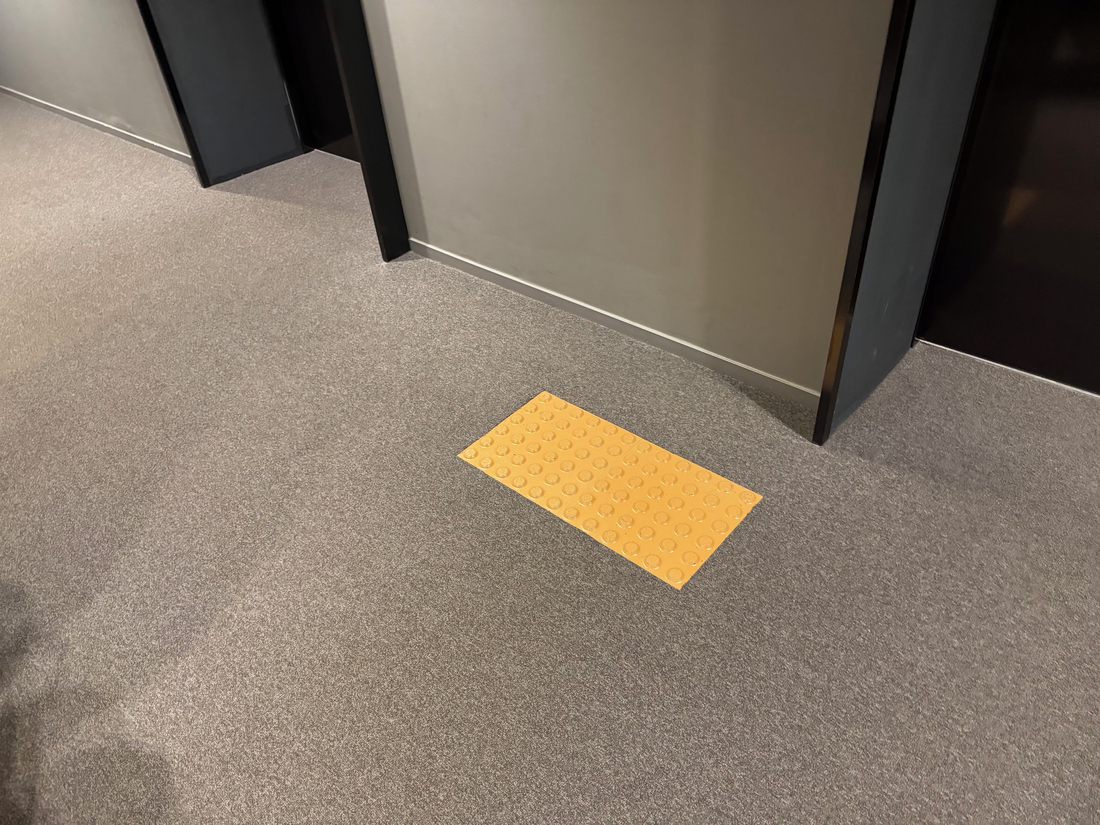
South Korea (more properly, the Republic of Korea [RoK]) has way
more pedestrian rumble strips than I have noticed anywhere else in
the world. I usually think of them as used almost exclusively at
the edge of rail-based transit platforms. Occasionally, newer urban
sidewalks will have them on the curb ramps. They're everywhere in
RoK. Here is a section in front of the elevator call buttons in a
hotel.
When you're in the transit system, there are several things on infinite loop on the screens there. Two of them are "special seats for the elderly and mobility impaired" and "special seats for pregnant people". I don't remember any buses that didn't have access at the front that didn't have stairs, but most of the back exits were flat, so it may be that wheelchair/stroller access is through the back. I didn't ride many buses so I could be wrong. I did ride the trains a lot. The stations are often mazes, but accessibility is patchy at best. The elevators are hard to find and, I believe, not available at every station. You can't expect escalators much and sometimes you have to climb/descend stairs to get to the escalators. Admittedly, I was a tourist and didn't know my way around, but more than once I saw (presumably local) parents juggling infants while hauling strollers up and down long flights of stairs. Special seats for the pregnant, but no help for the new parent wrangling kids.
Access on transit is not the only issue. Many shops and restaurants are on second floors or basements with the only access being stairs from street level. The cultural villages are often built on hillsides so the roads/walkways are steep and textured and stairs are everywhere.
Conversely, RoK is not afraid of public seating. Benches are easy to find outdoors and in. Public bathrooms are plentiful and clean. Toilet paper supplies are occasionally odd with a central supply for the whole bathroom rather than toilet paper in each stall. If you're at a restaurant and see a big roll of toilet paper under the sign that tells you the code/location of the bathroom that's your clue to take some of that toilet paper with you before you head to the bathroom. Tourist attractions like a nature walk or waterfall will be cheap to get into and have bathrooms for you to use at the gate and depending on topography inside the park as well. The shops in the tourist attractions don't gouge the ill-prepared tourists either. Drinks at a shop halfway up a mountain cost the same as it would at the convenience stores in town.
Note also that RoK very rarely has public garbage cans (I only ever saw any in the biggest non-market style malls). Officially, you can return your trash to the place from which you originally bought the product... if you're still there. In general, though, if you're buying something from a different shop, they will take your trash from another store. Other than that, plan to hold on to your empties and wrappers until you get to a bathroom or back to your hotel room.
Craft shopping in Seoul
My main target in Seoul was going to be Dongdaemun Market which is a long city block of shops and malls. On one side of the boulevard is finished clothes (Pyounghwa Fashion Market): shirts, dresses, underwear, hats, jackets, etc. For the most part, I ignored that side of the street. On the other side is the wholesale to the public raw materials as it were. It is called the unhelpfully generic Dongdaemun Shopping Complex (동대문 종합시장). It is a cluster of 4 buildings with bridges inside such that the distinction between the buildings is sort of moot. The ground floor is a mixture of lace and fabric. Most of the floors 2-4 are fabric but the 5th floor is beads, jewelry making, and string. The 6th floor has fairly wide selection of restaurants to keep you fueled.
While most store front type of places will take credit cards, there are many shops, even in the Shopping Complex (DSC), that only take cash. The ones that do take credit cards will often offer a discount (10% from one) if you have cash, so it's up to you how much cash you want to walk around with. Note also that it's closed on Sunday and watch out for holidays.
String shopping
During that Korean visit in 2019, I bought oval shoelace type string with contrast edging without aglets. I tried it out after I got home, and fell in love. It was cheaper, of course, than shoelaces and came in uninterrupted length. I soon realized that I wanted more and since I had taken their business card and managed to not lose it I contacted them not much later intending to order in bulk, but no response. Now I had kept their business card all these years and they show up on Naver Maps, so on this trip I had to check. When I went there this time, however, with a sample to show them they said they didn't make/sell that cord anymore. 😭
Of course, I scanned DSC's many decorative cord sellers and the
non-DSC shops down the street who have both decorative cord and
practical ropes. No one had my edged oval cord (actually, much
later, I did find one but they were selling (at least to me) for
$2/yd which is a bit spendy).
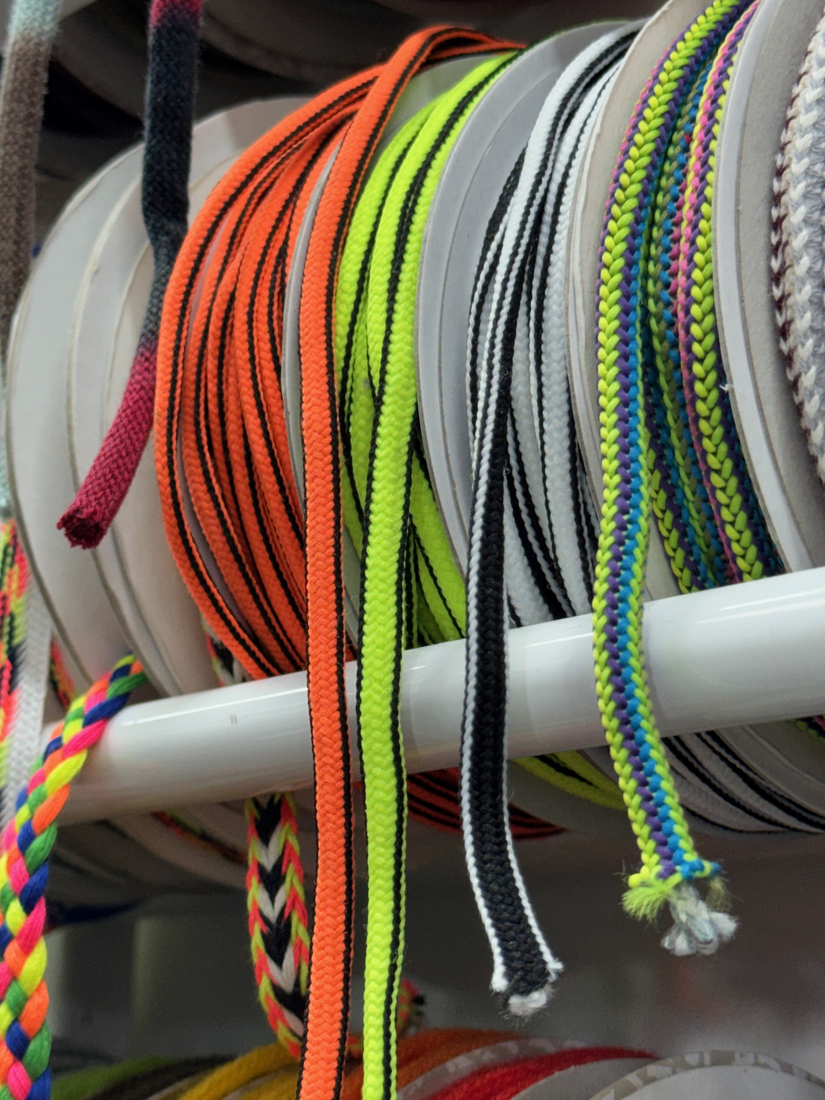
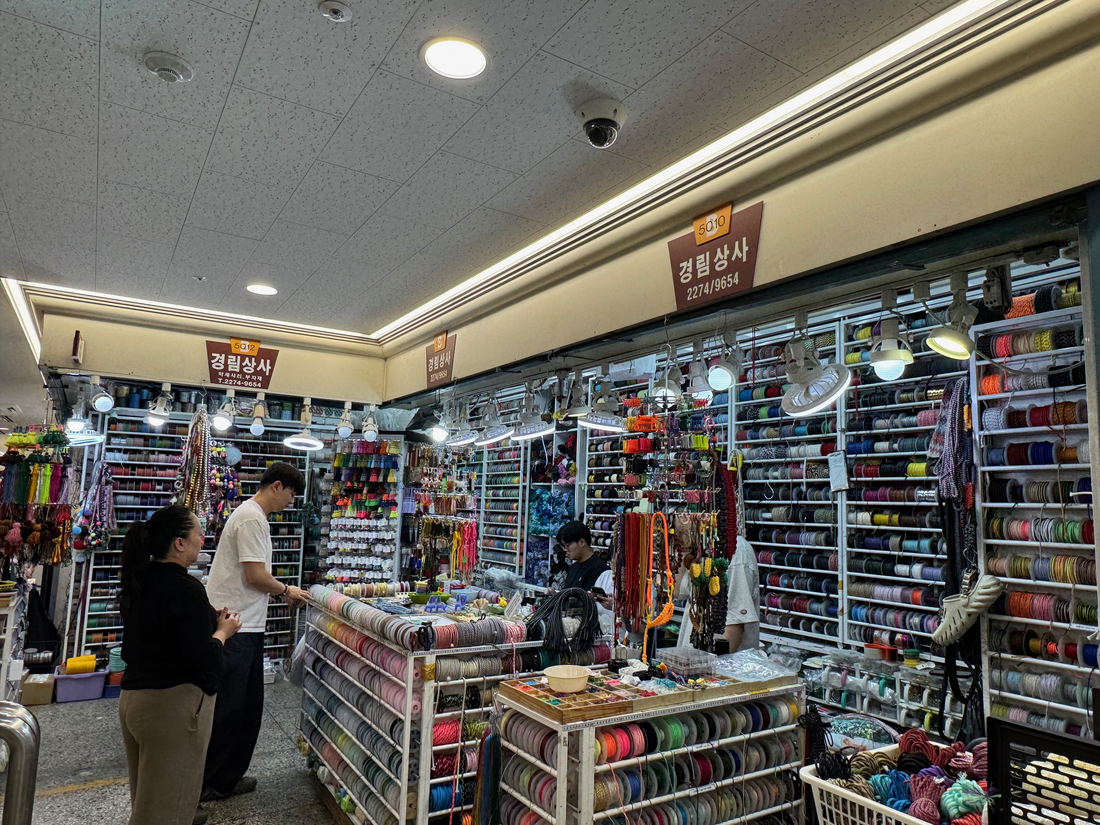
Up on the 5th floor in stalls 5010-5012 is the
Kyoung Lim Co. (경림상사) which had
a spectacular display of cordage including what I believe to be
maedeup cord, although on their website so far I have only found
polyester cord vs rayon in the maedeup style. In any case, while
picking out string to order, I showed my sample to ask if they had
any similar style of cord. They had some that was rectangular
rather than oval in cross-section and made of something cotton-like,
so too rough. The seller mentioned that they had a factory and
could make something like if I wanted to order. I took their
business card and filed that information away.
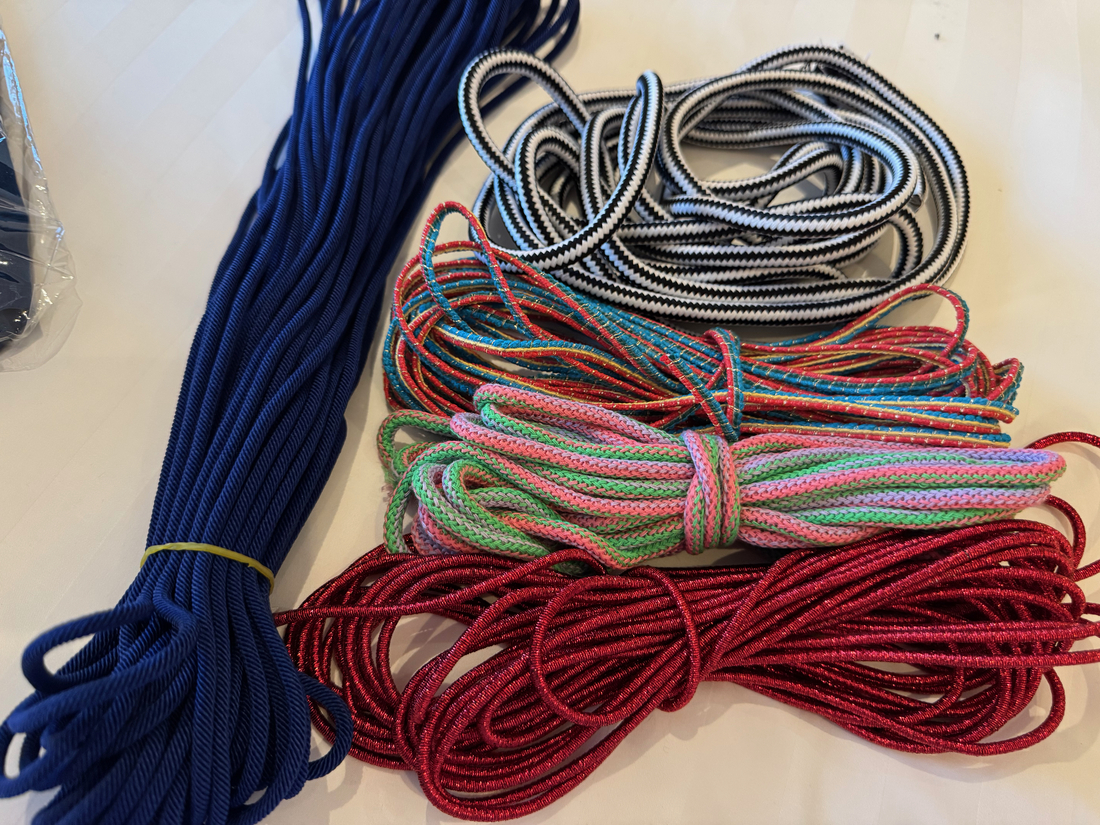
Our trip itinerary took us from Seoul, to Jeju, Busan, and back to Seoul. When we got back I decided to discuss costs with Kyoung Lim. It was quite reasonable and they would be able use a more suitable material in the colours I wanted. I had thought that we'd negotiate weave, materials, and colours and then when their production schedule had space they'd make my cord in a month or two and then ship it to me in Canada. That wasn't their plan. They wanted to make my cord and give it to me before I left. When I suggested that they could send me my string by mail they made faces and said that postage is soooo expensive. If I had any notion that this would be the procedure, I would have started the process much earlier in the trip. This was Thursday and I was leaving on Tuesday, plus Monday was a holiday. It came down to what time on Tuesday we were leaving (dinner time, so we could come to DSC in the morning to pick up my order). By the next day they had made a sample and sent me photos which I approved. Madness, but the good kind. 🥸🥰
Hanbok
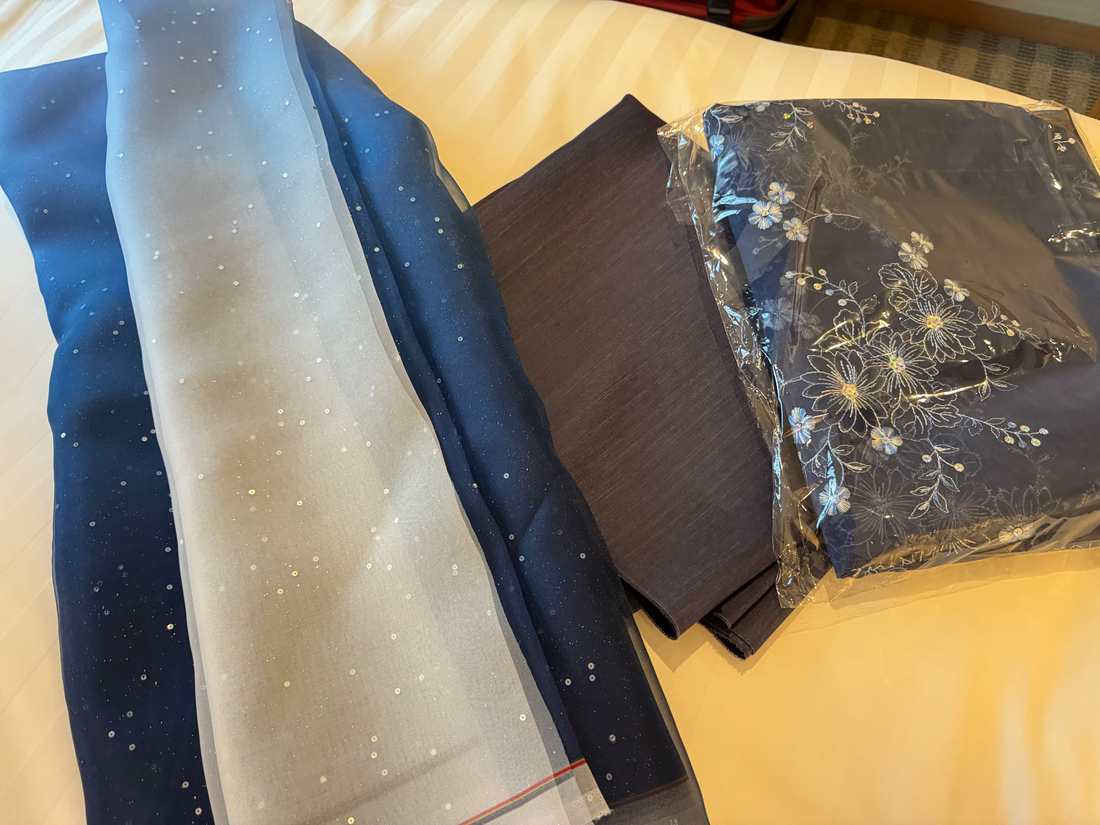
Unlike my string manufacture experience, I had an actual plan for
possibly ordering a custom hanbok. The DSC
and at the other end of the Dongdaemun area is
Gwangjang
Market (광장시장). Gwangjang has many shops with ready made
hanbok (also used), so if you're a standard size you could be in
luck. I was going to talk to some hanbok tailors, get measured so
that they'd have time to make my hanbok while we were in Jeju and
Busan, then I could pick up my custom order when we came back. Now,
it's not like I have many times/places to wear a hanbok (or any
formal garments, really) so price was definitely an object. I did
only talk cost with one tailor so I might have found someone in my
price range, but I am also full of hubris (despite definitely being
a rank beginner sewist) and confronted with rolls and rolls of
fabric I decided that I would make my own.
Another nexus of hanbok activity and shopping is Insadong, officially part of Jongno (see books), specifically Insadong-gil, the focal street for hanbok, modern and traditional, calligraphy supplies, name stamp makers, art, and tourist friendly crafts. There are many side streets to explore with more crafts, tchotchkes, and food.
Not so much a side street, Ssamzi-gil is a larger mall that spirals a bit above the other buildings in Insadong-gil. To me it is a modernization of the traditional markets with little enclosed shops vs open front stalls. The shops also appear to be run by younger people with a more modern edge or a modern riff on traditional crafts and garments. Quite a few shops here run workshops if you'd rather make your own. It feels somewhat pricier and trendier than some of the more traditional offerings nearby.
In my memory, Bukchon Hanok Village was effectively a side street part of Insadong, but it's definitely nearby. The area cannot decide if it wants to be a tourist area or not with many signs informing you in a reproving tone that this is a residential area so keep your voices down and don't block people trying to live in their neighbourhood, and mind the curfew. Still there are many hanbok rental places, restaurants, and shops. The area is hilly and many of the public facing establishments are up stairs with no provisions for accessibility so keep that in mind.
In Bukchon is the Donglim Knot Museum/Workshop. The space is tiny and does not seem to offer what cannot be found elsewhere in more accessible locations.
Books
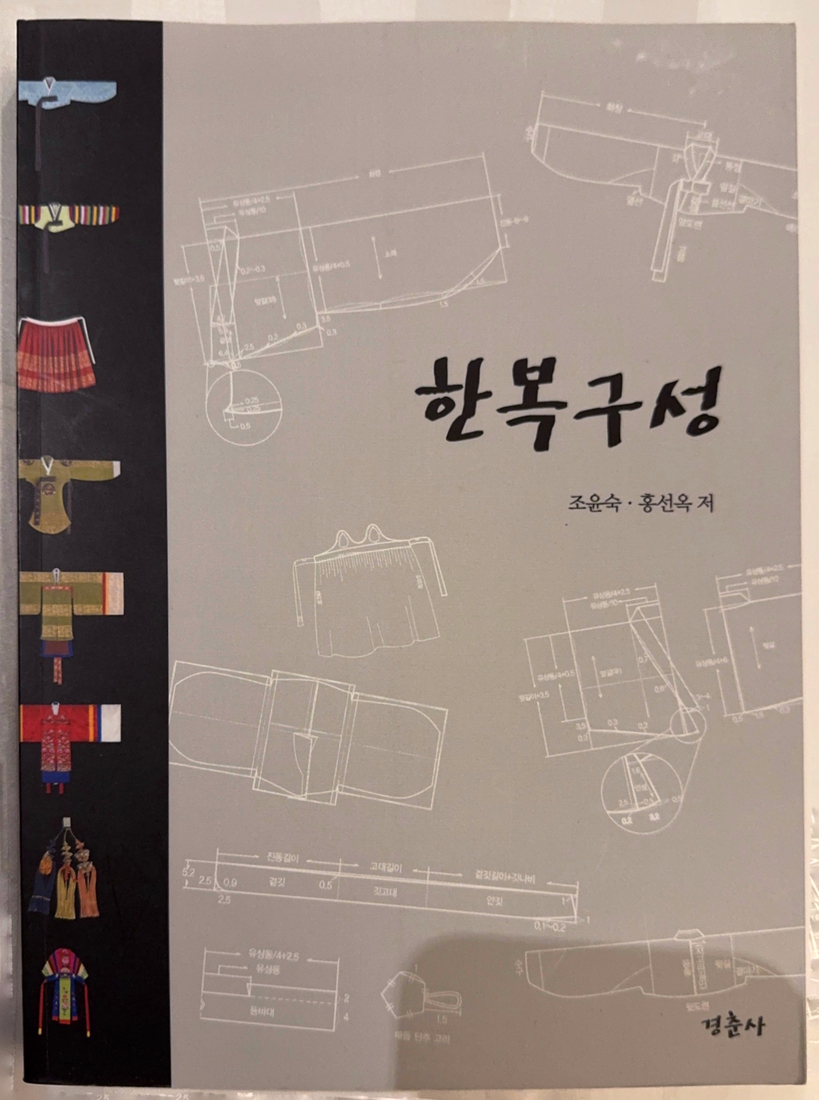
Now, I don't read Korean anymore than I read Japanese or Chinese.
That doesn't stop me from visiting bookstores whereever I travel. A
little research told us that the flagship stores for most of the
bookstore chains were in
Jongno. I was
looking for books about maedeup (매듭), bojagi (보자기), and hanbok
(한복). A combination of finding the craft section to scan the
shelves and looking up various keywords (sometimes what I'm looking
for is deemed cultural and not shelved with the rest of the crafts)
on the self-serve kiosks help me find books to buy.
Yarn Shops
As previously noted, I was trying to keep the craft shopping isolated to Dongdaemun, but I didn't have a complete personality transplant. So when I came across a mentioning of Sevy Haus, a large yarn shop, I had to put it on the want-to-go list. While the whole thing is 7 floors, only 3 are shop and the rest is lounge. They mostly carry their own branded yarns and a light smattering of other. They also carry needles and accessories but their overall stock was not in the density and variety I have come to expect from Asian stores.
Other yarn craft supply sources around town include entirely random small shops sprinkled about including in the transit malls plus a few in the traditional markets. Most mostly carry plastic chenille yarn that you might use to make a dish scrubby. No idea why that's so popular or if it's just popular right now (2026). Daiso's are more plentiful in RoK than North America and have better stock in general. That said, bigger Daiso's are more likely to have better crafting supply stock.
Craft shopping in Jeju
Jeju is RoK's Hawaii, a tropical-ish island. Many K-dramas are set there and in preparation we started watching Welcome to Samdal-ri but never finished it. I was pulling for Jeju to be amazing because we need a substitute for Hawaii and Mexico is probably not it.
A slight negative is that Jeju's geography is such that we had to rent a car while there. Unlike the rest of RoK we could not rely on transit for all our transportation needs which is our preference.
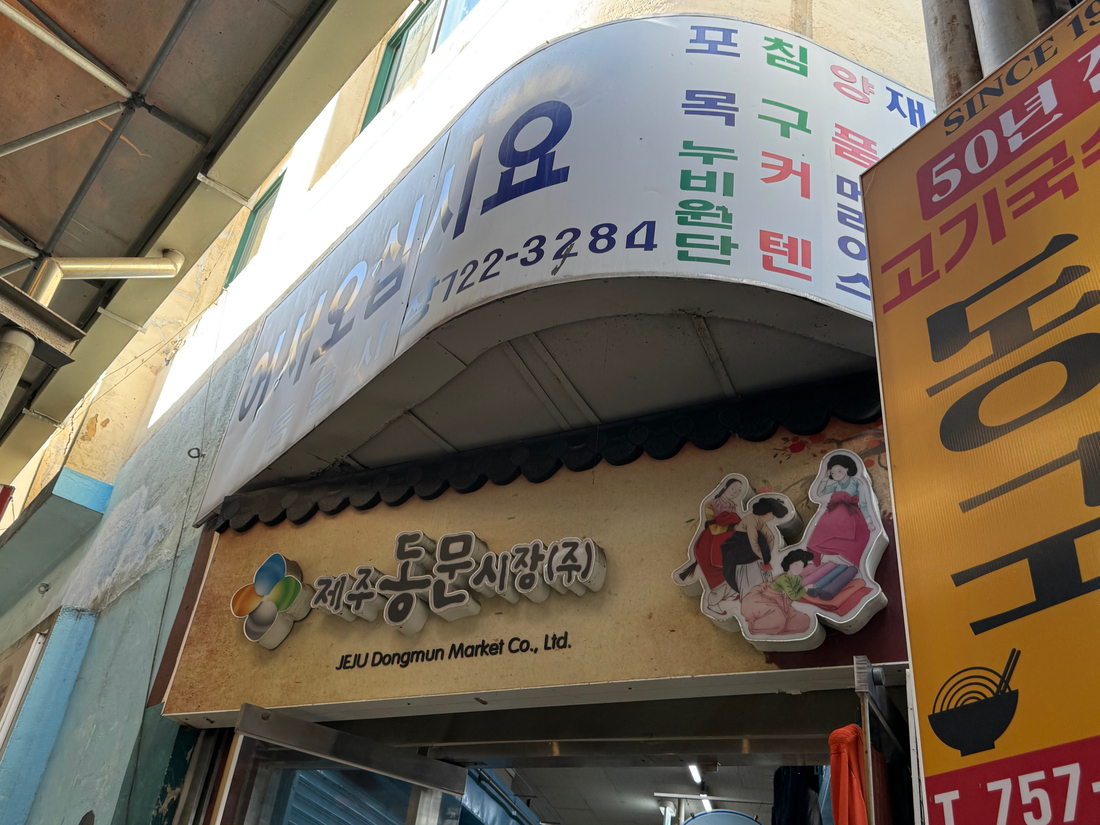
After we landed and got our car we headed straight for the Traditional Five-Day Market. It's huge and mostly fresh food of the grocery variety rather than cooked. There were clothing, tools, flowers, and even bunnies (dwarf breeds, so pets?). Not much handcrafted, though. Not far from our hotel (south side of the island) was the Seogwipo Maeil Olle Market (서귀포매일올레시장), which is permanent and open every day. While there were raw material foods (mostly seafood), there was tonnes of cooked food for the tourists to sample. There were also clothing and bed linens, toys and souvenirs, but not much in the way of handcrafts although there were 2 small yarn shops.
We also managed to get to the Seogwipo Five-Day Market but it's smaller than the other 2 we had been to and wasn't memorable from a food or crafty perspective (an entire market on Jeju and no orange juice vendor?!?).
I only heard of Sorangjang after we came home, so I cannot vouch for how much handcrafted things to see that they have. Apparently they are open on the 2nd and 4th Fridays of the month, so I'm not sure if the timing would have worked out in any case.
Touristiness
On my bucket list to visit is the Giant's Causeway and it turns out that Jeju has similar geologic formations. While not as big an identity marker as oranges on Jeju, basalt is also a significant advertising feature. My biggest problem with the basalt columns on Jeju, though, is that we could see them from a distance, but we could not walk on them (that I could see/find?). Is that also the case in Ireland???
Among other things, there were formal 3 (4?) waterfall parks plus a volcanic caldera to see on the island. All were well organized, nicely maintained, and economical to visit. The terrain requires an able body to navigate as it is all stairs (and a lot of them!) and no gondolas or other transportation assistance. The views were nice, although that was all that was available. There was no getting in/under the waterfalls, that I recall.
There is both a chocolate museum and a chocolate "land" on Jeju. We only went to the museum which had lots of information and informative displays but not enough interactive displays as it were. Don't show me a chocolate fountain with a sign that says "don't eat"! 🤣 Sure, there was a gift shop with some nice chocolates made in the museum, also classes to take, but I want less genteel decorum from a chocolate "experience" and moar tastiness. 😇
You cannot miss Jeju's obsession with oranges, when you go. The local hallabong is an especially sweet variety of mandarin/satsuma orange with a vaguely gourd-like shape. It is only though a significant application of will-power that I escaped the island without an orange hat, although I did buy an orange hair clip. 🍊🎀 This is not to say that a lot of orange juice and ice cream was not consumed.
Craft shopping in Busan
While wandering around Busan, I came across the yarn shop Jinseon Mimosa (진선미모사) entirely by happenstance and serendipity. It is a well stocked 2 storey shop with good variety of yarn, tools, and patterns. Totally worth seeking out.
While not a shop, textile enthusiasts should consider the Asean Cultural House. I was lucky to go when the Weaving Hands, Women's Time: Textile Traditions in ASEAN exhibit was being shown (on until Aug 30, 2026) and it was wonderful (also, admission is free).
Traditional Markets
Haeundae
Market is a small market, close to the beach, and mostly food.
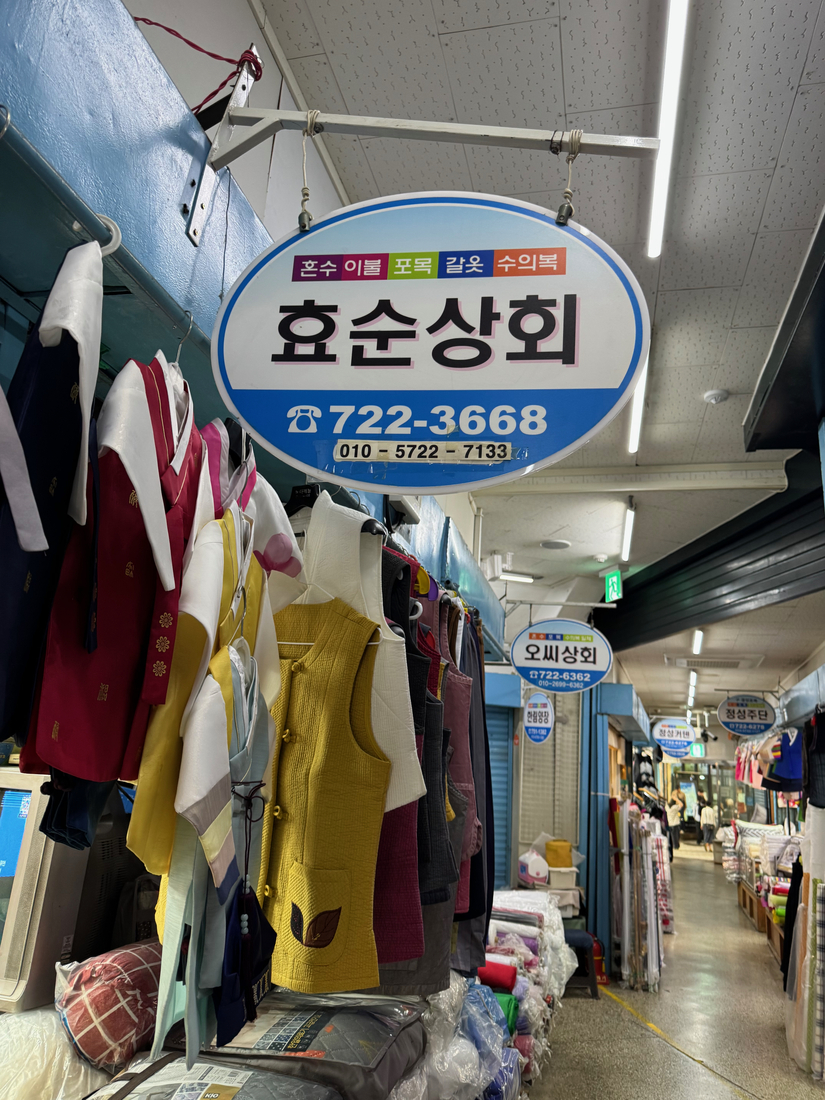
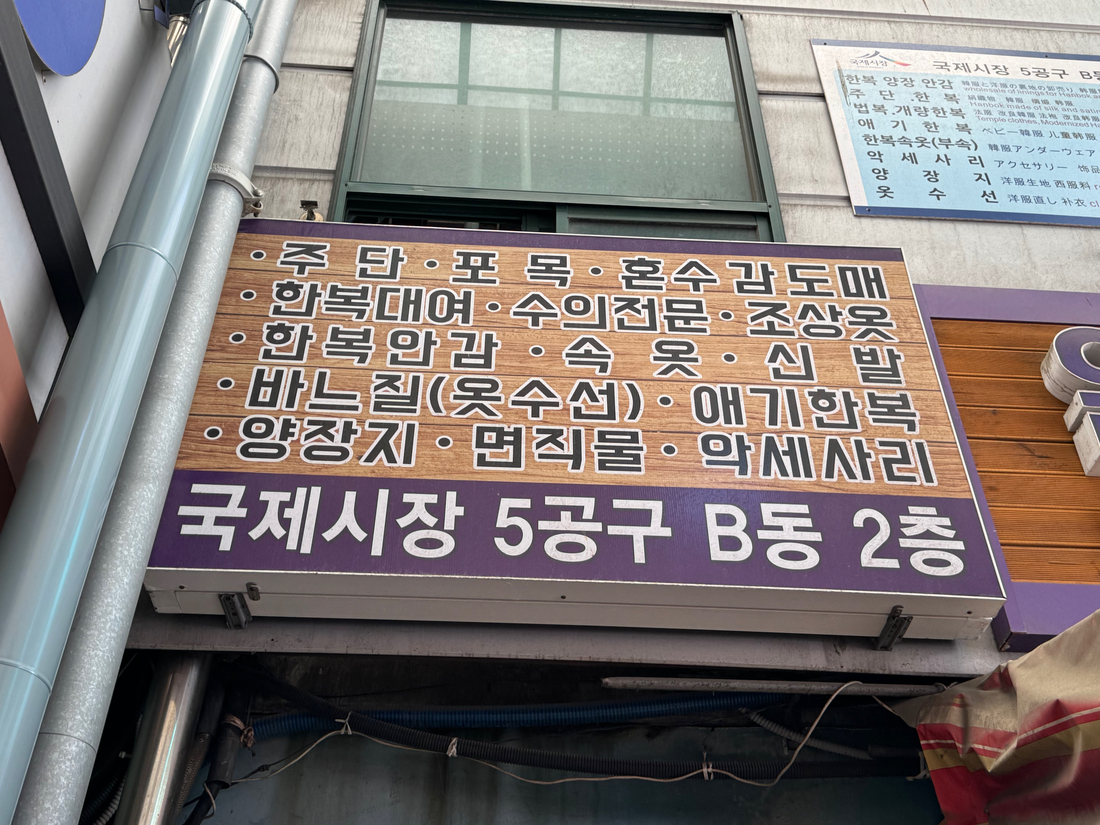
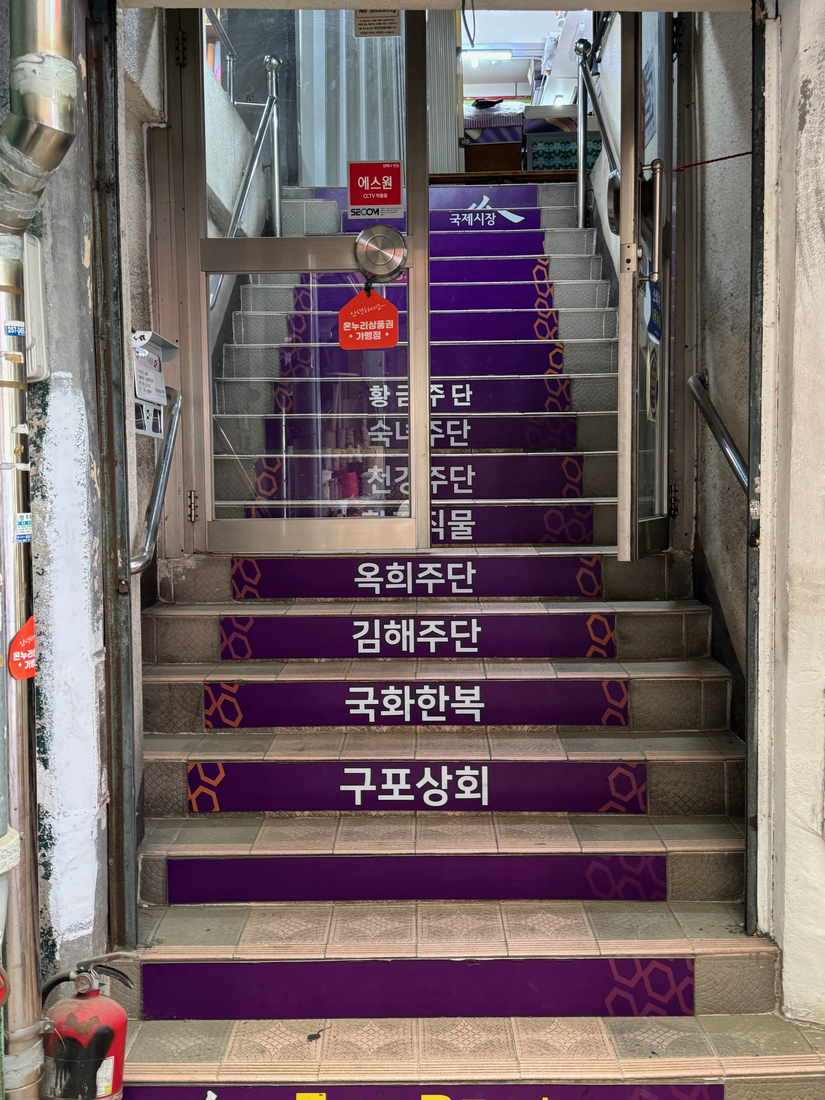
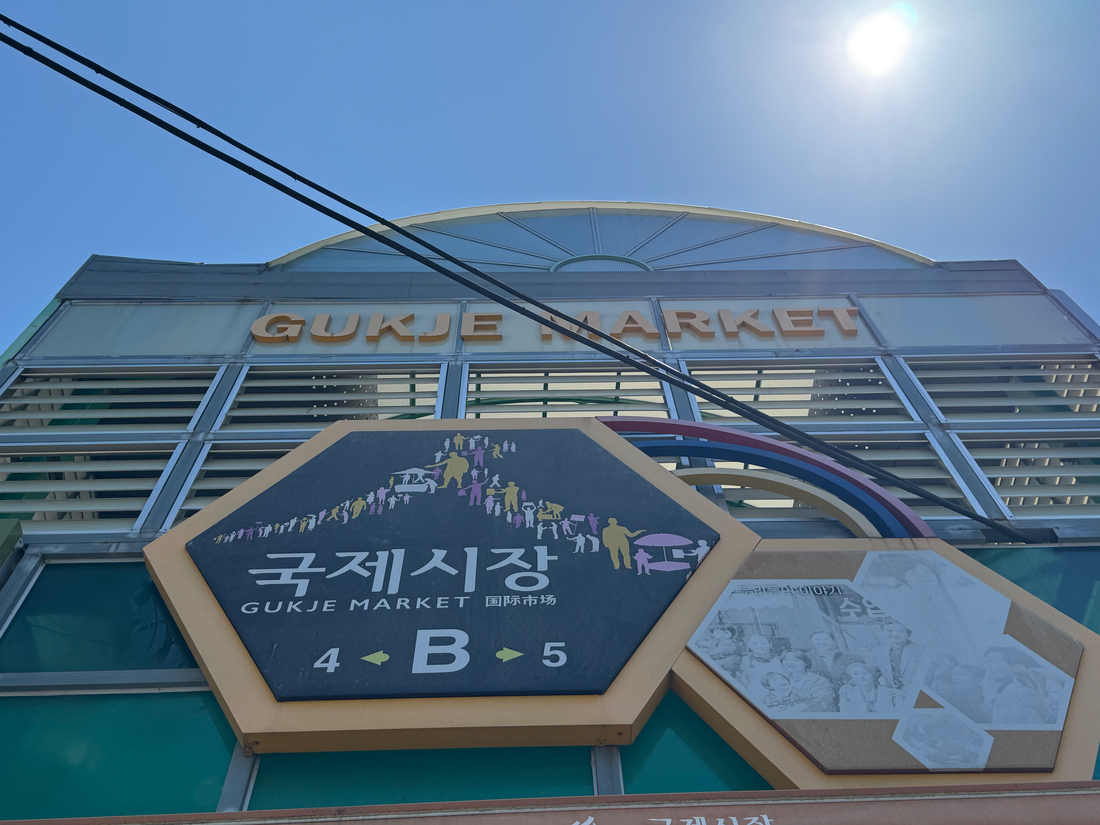
Gukje Market
(국제시장) is much larger with food both cooked and fresh,
clothing, lights, tools, and sundry. Hanbok and hanbok supplies
(eg. fabric) can be found on the second floor.
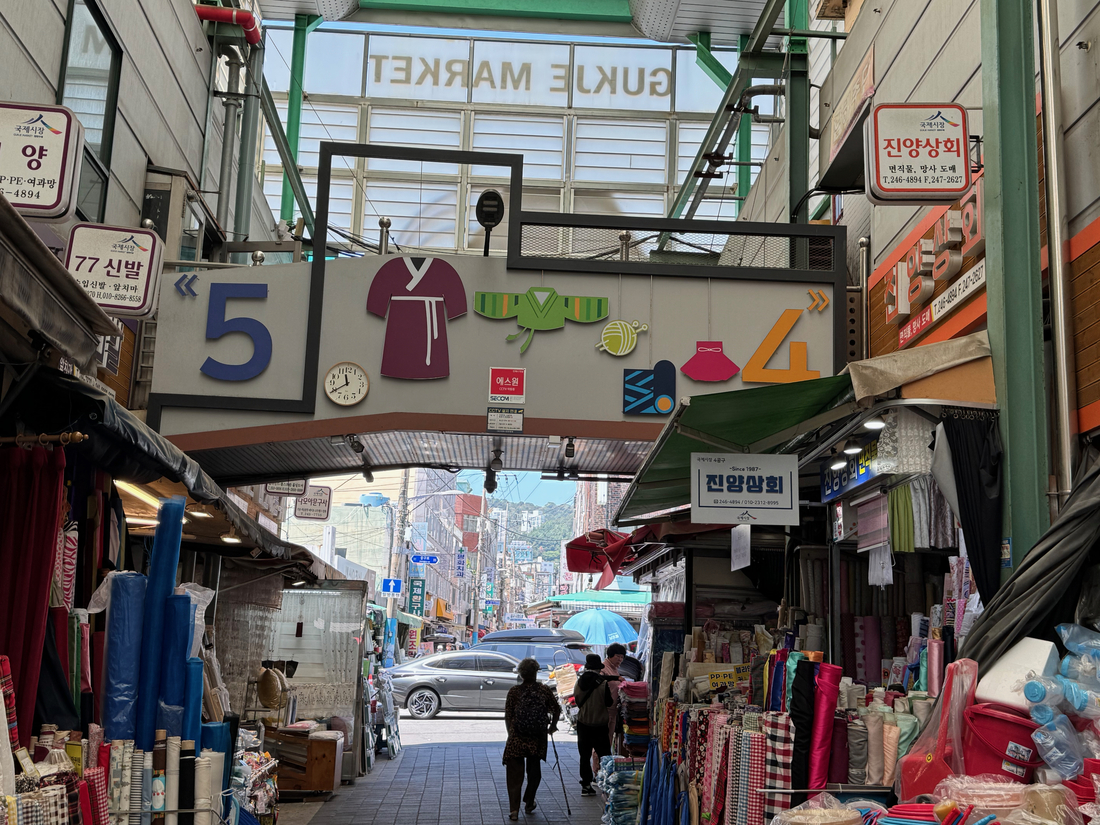
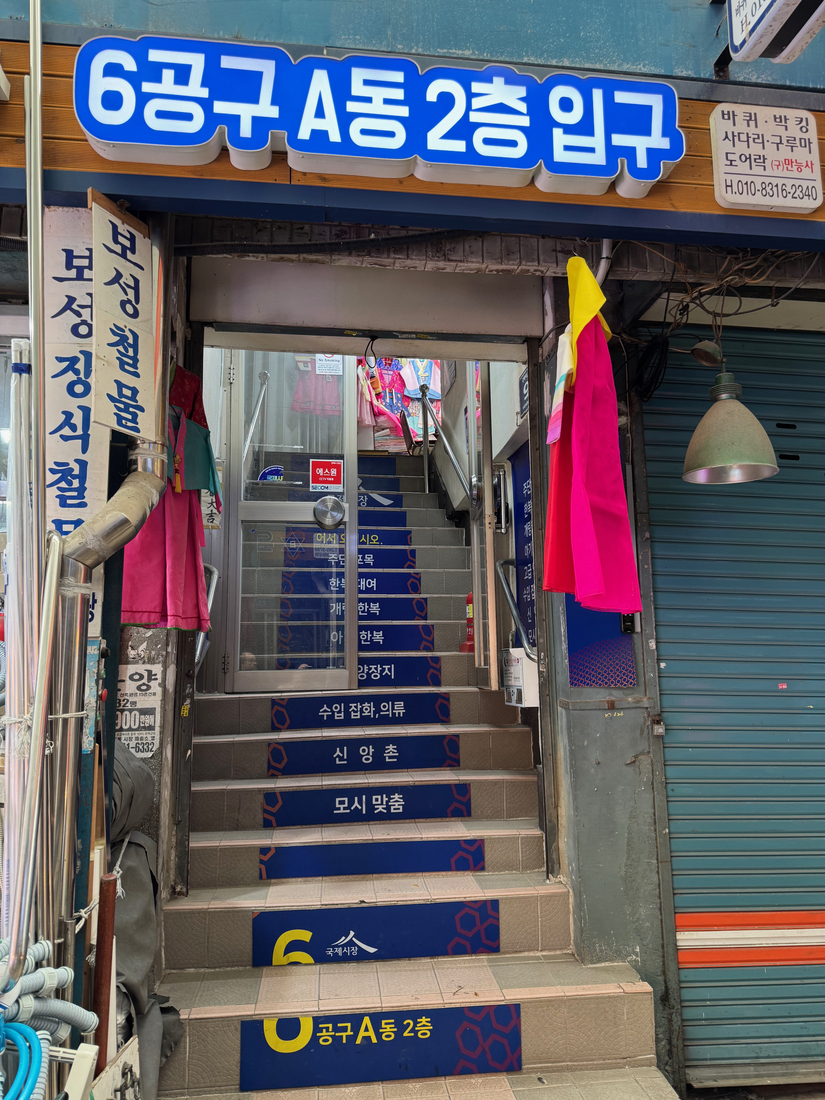
The Gamcheon Culture Village (감천문화마을) is a former residential area from the 1920s built on a mountain side that has been renovated into a retail/artist colony type of place. You can take a bus to the top but there is no avoiding some steep road sections and stairs to access many of the shops, galleries, and restaurants. There are actual artists and artisans to be found here. There are also shops that were clearly stocked from Alibaba/Aliexpress suppliers, although many of them are much nicer than the simpliest most bargain basement offerings.
There are quite a few hanbok experience rental establishments here. The question I didn't ask was if there are return facilities at the bottom of the village or if you need to either just browse nearby or climb back to the top to return your rental.
Apparently, there are also art villages to be seen as well, although we did not know about these.
Touristiness
There are 3 skywalks in Busan plus a suspension bridge which has a metal mesh type walkway vs glass, but I imagine that that won't make any difference if you've got any issues with height. Conversely it's a nicely scenic place with somewhat more stairs than the skywalks. You do have to pay for admission here, whereas the skywalks are free. We accessed it via a gonola. I remember seeing a path involving a lot of stairs below us, so you might be able to "just" walk there. Right by the gondola access is the Songdo Cloud Walk which is much lower down and free.
Taking you to the Cheongsapo Daritdol Observatory, skywalk, is the Haeundae Beach Train a short little touristy train (although it might not feel so short if you were walking the whole way?).
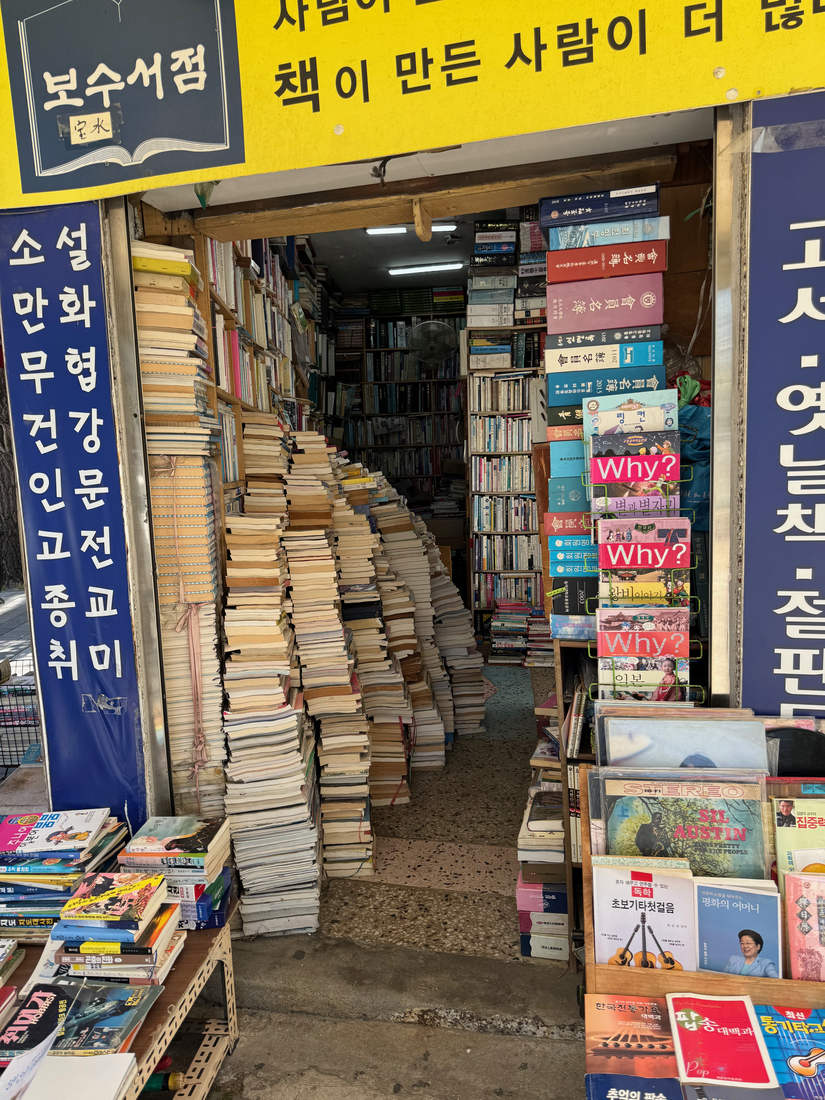
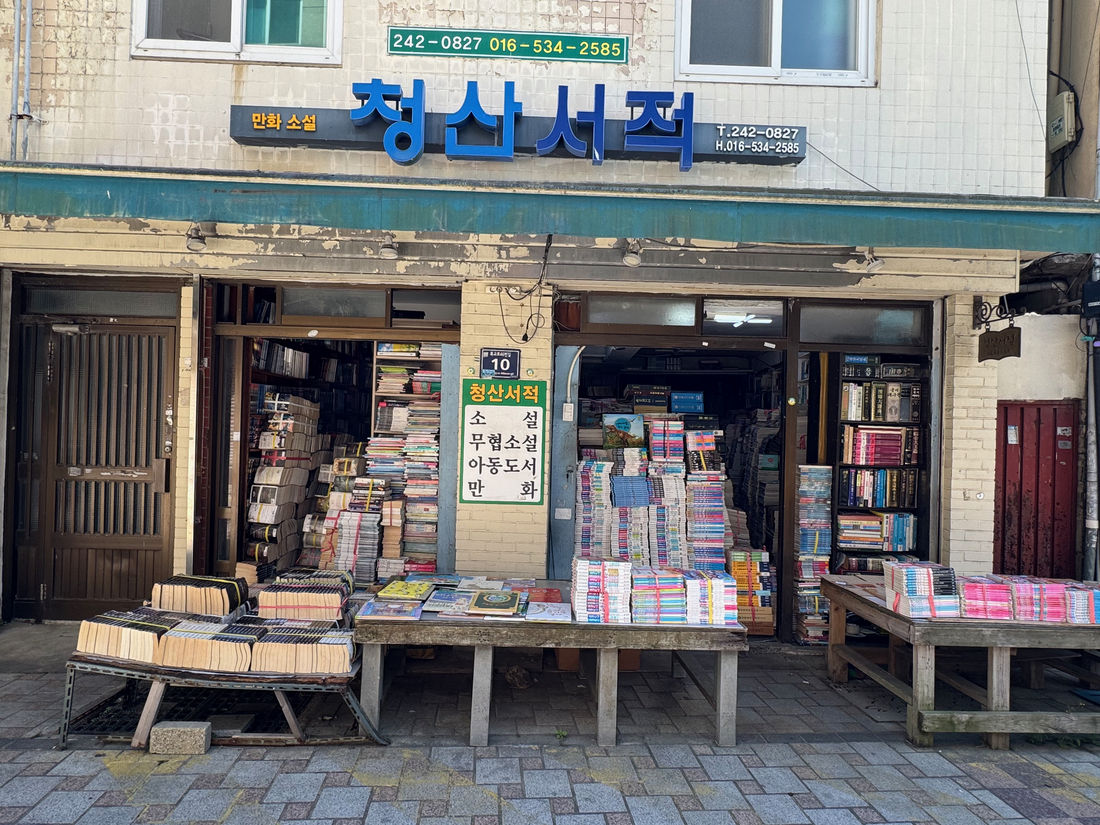
In Seoul we went to Jongno for the big bookstore chain flagship
shops. In Busan, we had seen a "Book Alley" on the maps and had to
go there. Book Alley is deeply confusing in that I could not figure
out who would be the audience and how would you ever find anything?
Firstly, unsurprisingly, you will not find much in the way of new
books here. The books on offer seem to be mostly remaindered stock?
None of the shops seemed to have any sort of theme. There is a huge
spectrum of organization level for the stalls from books nicely
shelved face out, to bales of books stacked such that you could not
physically enter the space.
What to do next time
The spouse was speculating that we had seen all there is to see in RoK and we'd not be coming back and so he need not put any more effort into learning Hangeul than he already had. When asked what my guestimate on the odds of our return might be, I said "High." My reasoning/hope is that there will be more international knot culture exhibitions. If/when there are, RoK is certainly going to be one of the venues. It's been a while, but I'm going to blame COVID and politics that I am not privy to and hope that more will eventually be organized.